

I was clearing out some old folders on my laptop the other day and found a marketing plan I wrote for a fintech back in 2023. It was full of optimism, including about seven different “temporary processes” that the company said they’ll replace within three months.
They didn’t. And probably, not one of them ever did get done.
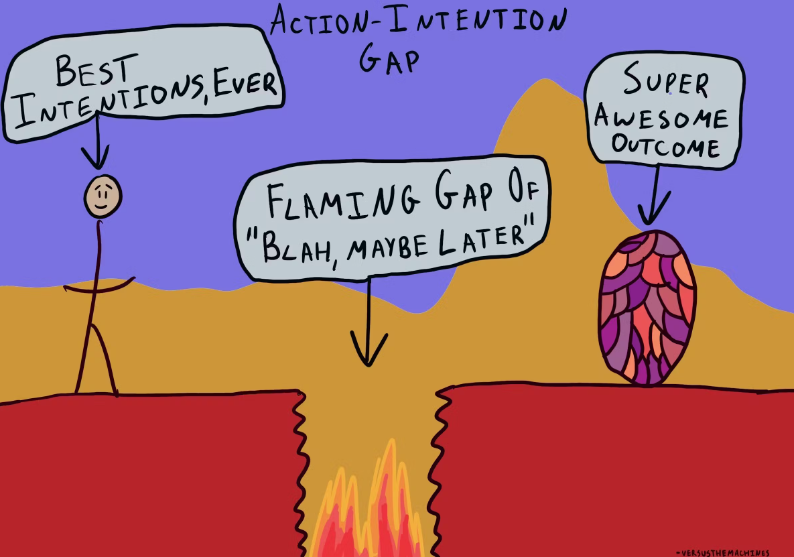
Instead, those temporary bits became permanent fixtures.
For businesses in the financial space, I’m constantly seeing:
Teams build their product with precision and discipline… but often run their own operations like a patchwork of inherited habits.
That’s where things start breaking.
Quietly at first, until the costs start to mount up.
Why smart teams stick to bad systems
Let me tell you something you already know but probably don’t say out loud:
Most internal processes aren’t designed, they’re accumulated.
A tool someone introduced three years ago.
A spreadsheet kept alive because “it’s what we’ve always used.”
A content calendar that’s actually three Google Docs and a WhatsApp group.
And before you know it, your “stack” looks like the wiring behind an old TV.
From a psychological point of view, this is classic status quo bias.
We favour the familiar, even when it’s obviously inferior.
We rationalise:
“It works well enough.”
“We’ll replace it after the next release cycle.”
“We’ll fix it when we’re less busy.”
Spoiler: no one is ever less busy.
What’s more, humans consistently underestimate the long-term cost of short-term convenience.
McKinsey once found that 70% of transformation projects fail because people simply revert to familiar habits.
It’s not a technology problem.
It’s not even a skills problem.
It’s a comfort problem.
Your team knows the tools.
They know the shortcuts.
They know how to make the broken bits “sort of work”.
Until they don’t. That’s usually where the cost creeps in.
Ask any Ops manager in private and they’ll tell you the same story:
What used to be “fine for now” becomes “painful forever”.
Inside the mind of your prospects
Your prospects aren’t that different.
When you try to tell them your solution is faster, cleaner or more efficient, they’re not hearing the product, they’re hearing the effort involved in changing.
Their internal monologue is something like:
“Sounds good.”
“But we’ll have to get IT involved.”
“And train the team.”
“And migrate stuff.”
“And Tina will absolutely moan about this.”
Inertia is deeply emotional.
People stick to tools not because they’re good, but because they’re familiar.
So, when your marketing tries to sell “better,” their brain automatically responds with “more work.”
This is where your distinctiveness matters.
A clear, human, genuinely differentiated message cuts through the activation energy required for them to shift.
It reduces friction.
It helps them imagine a world where the switch is painless and maybe even enjoyable.
Why fintechs struggle more than they admit
Here’s the irony.
Fintechs build their products to solve exactly these pain points for clients… while experiencing the same operational headaches themselves.
Internally, it’s all Slack threads, duplicated Notion pages, publishing content from a folder labelled “NEW CONTENT FINAL FINAL V5 ACTUAL FINAL”.
The tech is there.
The know-how exists.
But the mindset is stuck somewhere between “We’ll do it when things calm down” and “Let’s not break what kind of works”.
And because everyone is rushing (fundraising, acquiring customers, shipping features, managing compliance), internal structure often slides to the bottom of the list.
The thing is, if you don’t build systems early, your company builds you into the system.
And you start to notice it in small ways:
- Work feels heavier.
- Projects take longer.
- Marketing loses rhythm.
- Decisions need more meetings.
- People complain about “lack of clarity”.
Sound familiar?
Outsourcing what isn’t your strength
At some point, every team has to decide which problems they’re actually built to solve and which ones they should hand off.
If your product simplifies life for your clients, your marketing should simplify life for you.
That’s where outsourcing the messy bits (strategy, content creation, storytelling, positioning) becomes a systems upgrade, not a luxury.
It’s the same thing you tell your clients:
Do the thing you’re brilliant at.
Let someone else handle the rest.
And if that “someone else” happens to be me, well, that’s just operational efficiency waiting to happen.
Speak soon










Leave a comment
Your email address will not be published.