

Imagine this.
You’re in an ice cream shop.
Forty-two flavours. All immaculate and deliciously presented. All glowing under those slightly-too-bright freezer lights.
You walk in wanting something. Anything. You’re not picky, but this time, you’re going to order something different.
Ten minutes later… you’re still there.
The teenager behind the counter is losing the will to live.
The queue behind you is questioning your life choices.
And you?
You’re paralysed by the fear of picking the wrong scoop of frozen dairy.
So you do what every rational adult does.
You order vanilla (or in my case, salted caramel).
Again.
That is the ambiguity effect: when uncertainty makes us default to the safest, dullest, most predictable choice. Even if it’s not the one we actually want.
The same thing happens in financial markets
Investors do it.
Customers do it.
And yes, your own prospects do it too.
When a choice feels unclear or when the outcome feels fuzzy, people back away from the better option and migrate to the most familiar one.
It’s why fund flows cluster around brands that feel “safe”, even when performance is identical.
It’s why fintech buyers stick with legacy vendors, even when those vendors are basically charging them rent for old spreadsheets.
Uncertainty doesn’t freeze decisions.
It pushes people back to what they already know.
A 2024 study in the Journal of Asset Management analysed more than 23,600 equity mutual funds and ETFs. It found that funds with clear, plain-spoken sustainability commitments in their own prospectus attracted significantly higher inflows than those relying on external ratings alone – even when financial performance was similar.
In other words, when a fund spells out what it stands for, simply and transparently, investors flock to it.
The value wasn’t in better figures. It was in removing the ambiguity.
Clarity feels safe. Ambiguity feels like risk.
How this plays out inside your prospect’s head
Picture your prospect scrolling through marketing content.
They’ve had three meetings back-to-back and their inbox looks like a crime scene.
Lunch was an energy bar found at the back of their laptop bag.
Their brain is operating at the level of a tired Labrador.
They see your messaging.
They can’t immediately tell:
- What you do
- Who it’s for
- Why it’s better
- How it works
- Whether it’s risky
Their brain whispers:
“This feels like pistachio gelato… mysterious… could be amazing… could be terrible… let’s stick to vanilla.”
And poof! They’re gone.
Not because your product is bad, but because your clarity wasn’t good enough.
So what does strategic clarity actually look like?
It’s not long decks or 47 product features. It’s this:
1. A sharp problem statement
Not five. Not a paragraph.
One line that lands.
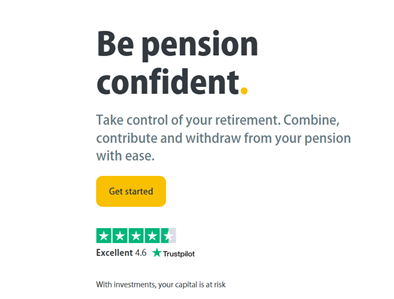
PensionBee get it. Their messaging immediately signals pensions don’t need to be stressful, old-school or intimidating. They simplify it and nail the pain point that many feel.
2. A simple promise
The outcome they actually want, not the one you want to sell.
When you see every fintech promise transparency, but fail to show what that means, it’s simply not enough. Wise don’t do that. They clearly lay out what transparency means for them – and it’s exactly what you, as the consumer, want to hear.

3. A visible differentiator
If your USP can’t be explained in under ten seconds, it isn’t a USP.
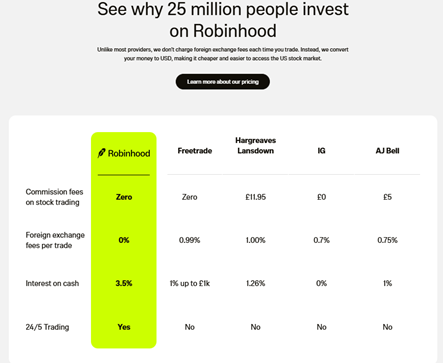
Robinhood highlight on their home page exactly what sets them apart from their competitors. It’s immediate, bold and easy to grasp. And you don’t have to dig around or decode finance speak.
4. A map, not a maze
Show how the product works. Show what it replaces. Show what life looks like after buying it.
Presentation changes perceived value.
Positioning changes perceived risk.
Monzo’s onboarding, public roadmap, clear messaging and content make the journey obvious. They don’t expect users to decipher hidden terms – they just walk users through what they expect.

Final thought
Markets wobble. Prospects freeze. Most brands think a fancy deck or a logo tweak will fix it. Wrong. Clarity beats fancy every single time.
The winners in uncertain times aren’t louder. They’re smarter. They make the choice so obvious that hesitation isn’t even an option. They turn the 42-flavour menu into three damn good choices and they’ll sell out.
Stop hiding behind ambiguity.
Spell out the problem. Own the promise. Show the path. Do that, and you don’t just survive uncertainty, you exploit it.
Everyone else? They’re still stuck at vanilla.
Speak soon,
Dan









Leave a comment
Your email address will not be published.